Study 01Parthenon · c. 438–432 BC
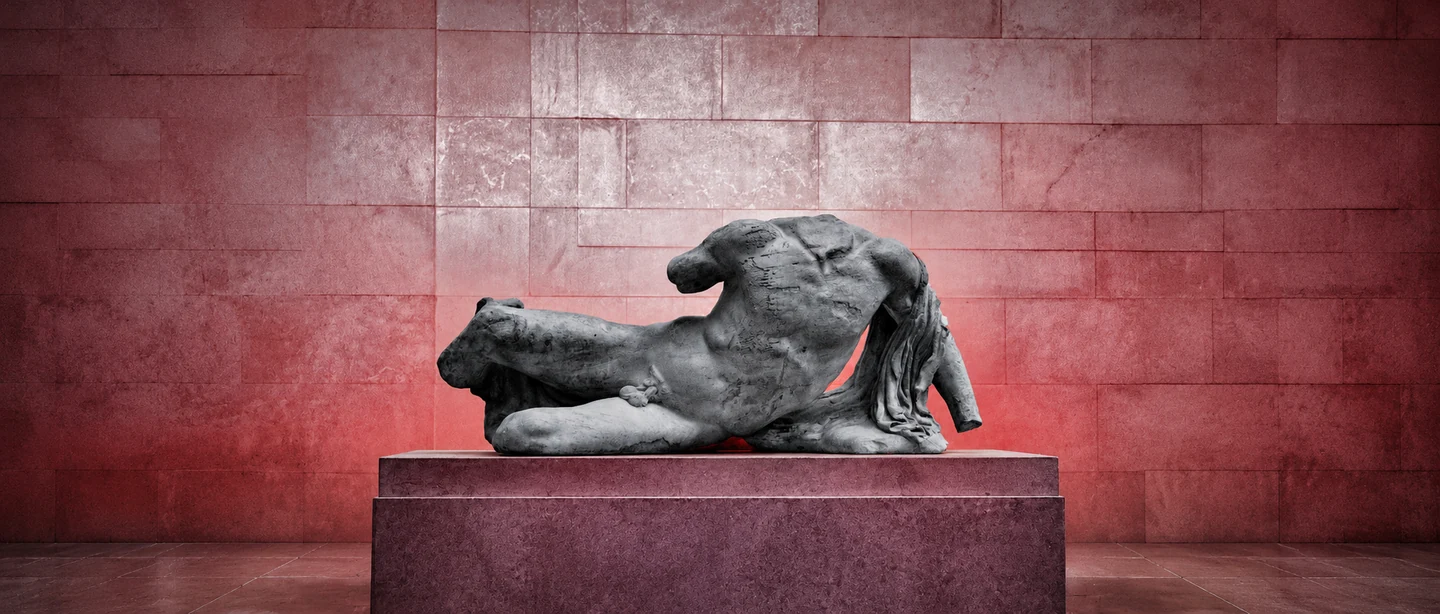
River god
Possibly Ilissos · West pediment, figure A
Marble · British Museum, London
A torso in suspension. The curve of the body carries the movement through its missing head and limbs.
Studies of the Elgin Marbles
British Museum, London
A study by Amr Ali
AA Editions by AMR Studio · 2026
The Parthenon sculptures
Athens / London
Four studies of the Parthenon sculptures, reimagined in a crimson gallery. The series considers the fragment as a witness to removal, display and belonging.
Possibly Ilissos · West pediment, figure A
Marble · British Museum, London
A torso in suspension. The curve of the body carries the movement through its missing head and limbs.
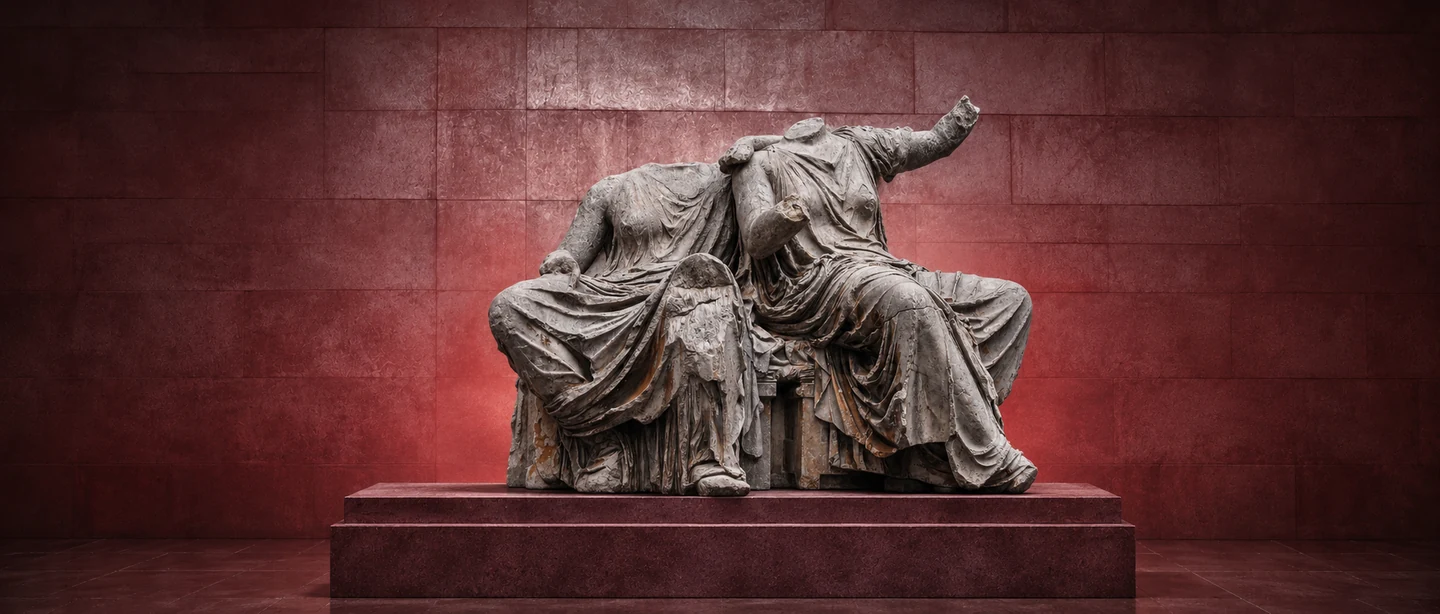
Traditional identification · East pediment, figures E–F
Marble · British Museum, London
Weight, folds and the closeness of two seated figures. The fabric holds the gesture after the faces and hands have gone.
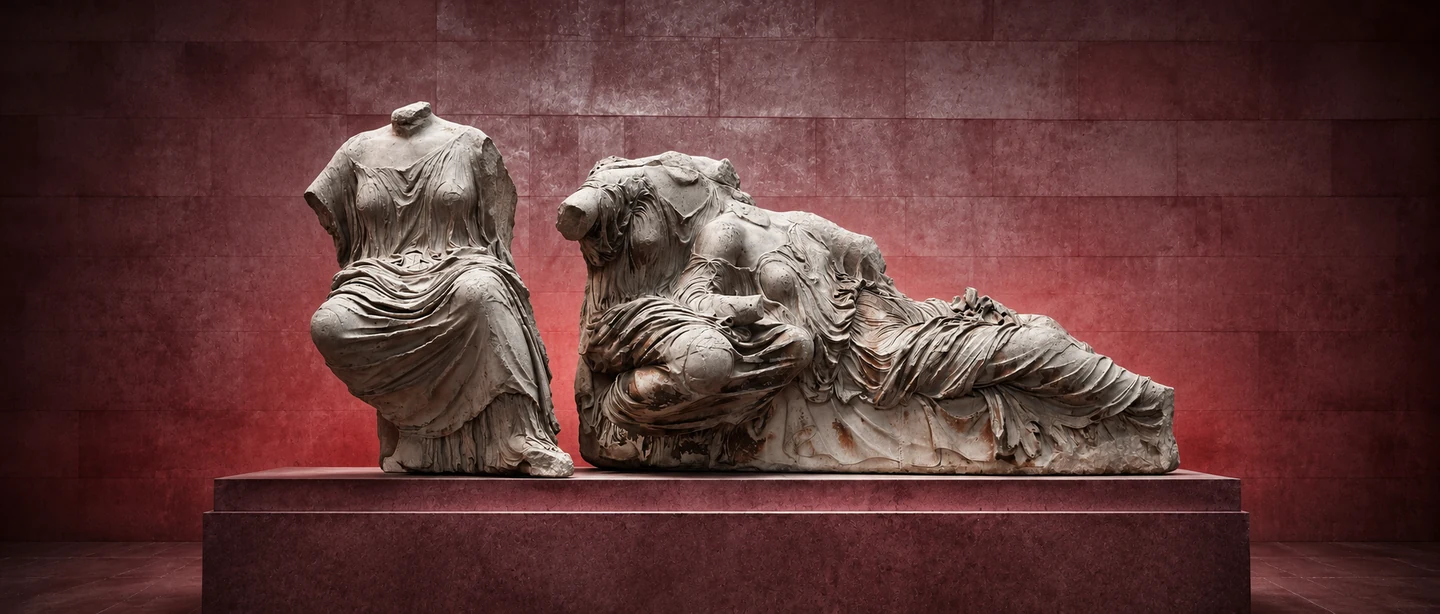
Often identified as Hestia, Dione & Aphrodite · East pediment, figures K–M
Marble · British Museum, London
Drapery moves across three bodies as a continuous surface. Deep folds gather the light, connecting upright stillness with repose.
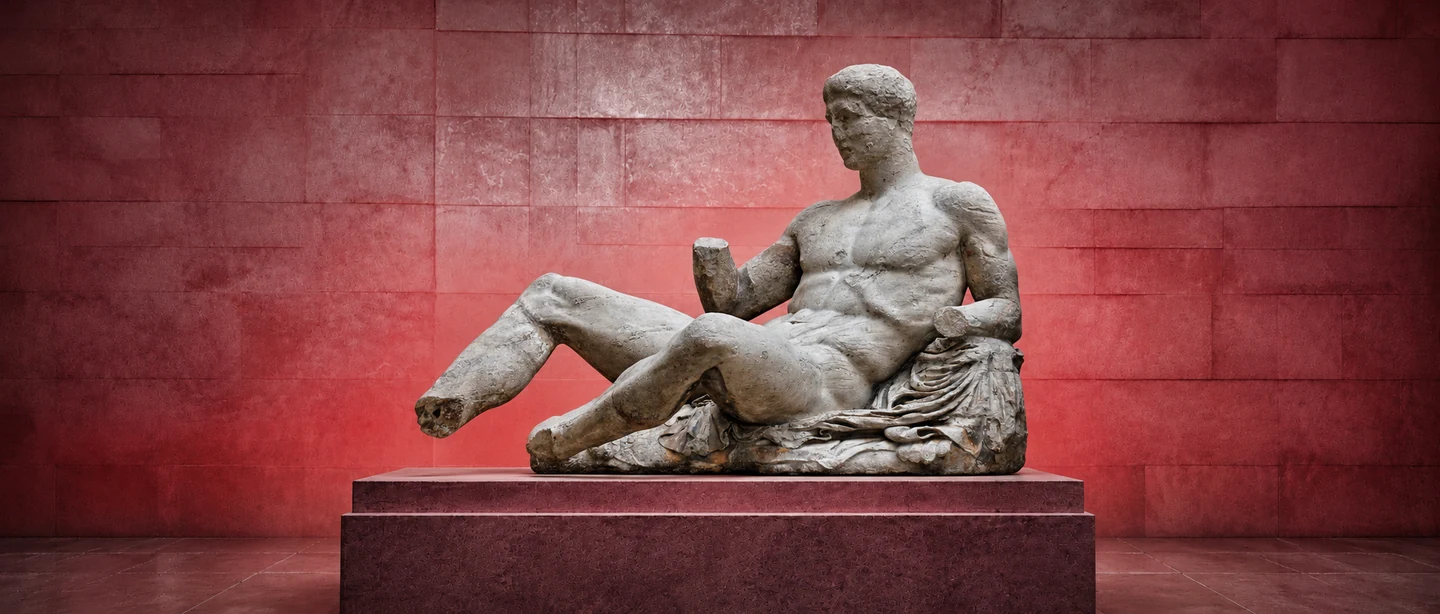
Probably Dionysos · East pediment, figure D
Marble · British Museum, London
The turned head and open posture retain a sense of presence. Worn marble holds the tension between an intact gesture and a fragmented form.
The sculptures were made for the Parthenon in Athens in the fifth century BC. Works removed by Lord Elgin’s agents were purchased by Parliament in 1816 and placed in the British Museum. Their separation from the monument remains the subject of Greece’s campaign for reunification.
Stolen Treasures gives this history an artistic frame through the body, the fragment and the act of looking.